

Why Do Bad Odors Develop?
Leather is a natural material that allows air to circulate. This is a major advantage for comfort, but when “moisture + heat + an enclosed space” come together, bacteria can multiply easily, especially inside shoes. With bags, the cause is often not the outer leather but the inner lining (fabric/textile), items left inside (wet wipes, cosmetic spills, workout clothes), improper storage, or a damp environment.
Another important point: An odor sometimes starts with a single incident (getting caught in the rain, wearing shoes for a long time with sweaty feet, perfume spilling in a bag), then becomes chronic because of the habit of putting the item away before it dries. So getting rid of an odor is usually a two-part process: first reduce the source, then prevent it from returning.
Quick Summary
- Bad odors are often caused not by the leather but by a damp lining, insoles, bacteria, and improper storage habits.
- The first rule: before deodorizing, dry the item completely and air it out well; the odor will return as long as moisture remains.
- In shoes, removable insoles are the main source of trapped odors: take them out, clean them separately, and let them dry completely.
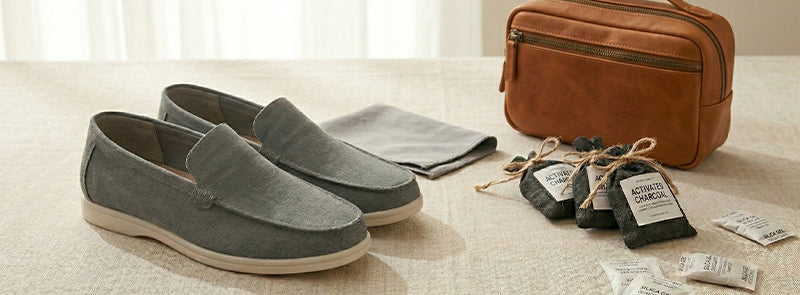
- Activated carbon/charcoal bags and moisture absorbers (silica gel) are among the safest ways to absorb odors.
- Baking soda or coffee grounds may help, but to prevent the powder from touching the leather and causing stains, always use them in a sachet.
- For musty or moldy odors, masking the smell isn’t enough: don’t expect lasting results without improving storage conditions.
- “Quick fixes” like using a hair dryer, drying something on a radiator, or spraying on lots of perfume can wear down the leather and make the odor worse.
- Regular care and proper storage (dust bags, stuffing, ventilated shelving, humidity control) go a long way toward preventing odors from returning.
Does the leather smell, or is it the interior?
Try this simple “source check” to find out:
- If the odor is strongest inside (the insole/lining of a shoe, the lining of a bag), your solution should focus on “drying + gently cleaning the interior + odor absorption.”
- If the odor is strongest on the exterior (cigarette smoke, storage odor, mustiness), focus on “ventilation + gentle surface wiping + proper storage.”
The type of odor gives you a clue
Sour/sweat odor: In shoes, this is caused by bacteria; insoles, sock choice, and rotation are key.
- Musty/storage-room odor: Dampness and sometimes suspected mold; a lasting solution is difficult without improving storage conditions.
- Sharp chemical odor: New products may smell of manufacturing or packaging; the smell usually fades with good ventilation.
- Vomiting/pets/heavy liquid exposure: Stains and odors go hand in hand; prompt, careful treatment is needed.
Before You Begin: 2-Minute Damage and Risk Check
A quick check before deodorizing protects the leather and prevents you from wasting time on the wrong method.
Is there mold?
If you see white-greenish spots, a powdery layer, or buildup between the seams, this is not just an odor issue; hygiene and material condition are also at stake. If you suspect mold, do not store the items in contact with each other.
Is there a risk of color bleeding?
Light colors (especially beige/pastels) and heavily dyed surfaces are more prone to staining if you use the wrong cloth or product. Test each method on a small, inconspicuous area first.
Is the item noticeably damp?
If it’s damp, dry it first. Starting the cleaning process with wet materials increases the risk of pushing the odor deeper and damaging the shape.
General rule: The goal is to “wipe the leather with a damp cloth,” not to “soak it.” Too much water can worsen odors and damage the leather’s shape and texture.
Getting Rid of Bad Odors in Leather Shoes: Step by Step

The usual order of steps for getting rid of shoe odor is: drying → removing the inner components → odor absorption → gentle cleaning → preventive routine.
Although the inner construction and lining can vary across categories such as Pegia boots, Cool Moon boots, loafers, sneakers, and slippers, the principle is the same: “Eliminate moisture, absorb the odor, then establish a routine.”
1) Proper drying and ventilation (the most critical step)
- As soon as you take off the shoes (especially if your feet were sweaty), loosen the laces and open the tongue.
- Stuff with crumpled, unscented paper and replace it every 2–3 hours. (Be cautious, as newspaper ink can leave marks on some linings.)
- Let them dry at room temperature in a well-ventilated place, rather than in direct sunlight, on a radiator, or with a hair dryer.
In most cases, this step alone noticeably reduces the intensity of the odor. This is because odor-causing microorganisms become more active in damp conditions.
2) Remove the insoles and laces
- If the insoles are removable, be sure to take them out. Odor often builds up here.
- Wash the laces in lukewarm water with a little soap, then dry completely.
Cleaning the insoles (practical method):
- Wipe with a slightly damp cloth and a little soapy water, then dry completely.
- If the odor is very strong, replacing the insole is sometimes the quickest solution (especially for shoes that have been worn for several seasons).
3) Odor absorption: The safest options
Solutions that absorb odor and dry out the environment, rather than just masking the smell, last longer.
Activated carbon / charcoal bags
- Place inside the shoe overnight.
- Apply for 2–3 consecutive days.
- Then air out the bags and reuse them (according to the product instructions).
Silica gel / moisture absorbers
- It reduces odor, especially in damp homes.
- Use the pouch inside a small bag without rubbing it directly against the leather.
Wooden shoe tree
- It also balances moisture while maintaining its shape.
- It’s one of the unsung heroes of Leather shoes over the long term.
If you use baking soda (use it carefully)
- Instead of pouring baking soda directly into the shoe, put it in a thin sock or pouch.
- Leave it overnight, then remove it. If any powder remains, brush it off with a soft brush.
The goal isn’t to spread the powder everywhere, but to absorb the odor in a controlled way.
4) Freshen the inside without overdoing it
If the odor is caused by a buildup of bacteria, gently freshening the inside can help:
- Dampen the microfiber cloth very slightly.
- Wipe the inside with about a drop of mild soap (don’t soak it).
- Then blot away the moisture with a dry cloth and leave the shoes open to dry.
What to avoid: Harsh chemicals, strong alcohol-based products, and bleach derivatives. These products can damage both the Leather and the lining; the odor can also mix with the chemicals and become even more unpleasant.
5) If the odor returns: check the “root cause”
If shoe odor keeps coming back, it’s usually due to one of these three things:
- Wearing the same shoes repeatedly (they don’t get a chance to dry)
- Synthetic socks or non-breathable insoles
- Sweaty feet + storing them in a closed space
In this case, the solution isn’t a one-time cleaning; it’s rotation (letting them rest for at least 24 hours), wearing the right socks, and airing them out regularly. Especially in winter, the habit of sweating in boots all day and putting them in the closet at night is the cycle that makes odors build up fastest.
How to Get Rid of Bad Odors in a Leather Bag: Step by Step
The goal with a bag is to find the source of the odor and get the lining clean and dry. A Leather bag can look flawless on the outside while a tiny spill or forgotten item inside keeps it smelling for days.
1) Empty it and check the hidden pockets
It may sound simple, but most bag odors come from:
- Forgotten gum or candy, a wet wipe, or a mini perfume leak
- Crumbs from spoiled food
- Pen ink or spilled cosmetics
Empty the bag completely, including all the pockets, and check by hand. Even crumbs left in the seams can cause odors over time.
2) Cleaning the lining: If there are no stains, “wipe and dry” is usually enough.
- If you can turn the lining inside out (as with some totes and models with fabric linings), you’re in luck.
- If you can’t turn it inside out, wipe the inside with a slightly damp cloth.
- Then leave the bag open, stuff it with paper to help it keep its shape, and let it dry.
If the odor is very strong (vinegar method, used carefully):
- Put a very small amount of white vinegar on a cotton pad (don’t soak it).
- Put the cotton in a small container and place the container inside the bag.
- Close the bag and leave it for 6–8 hours.
- Then remove it and air it out thoroughly.
The key point here: Vinegar must not come into contact with the Leather. It may not work the same way on every type of Leather; it’s safer to use short applications rather than leave it on longer.
3) Odor absorption: The bag/pouch method
- Activated carbon sachet
- Silica gel
- Unscented paper stuffing
Put these inside the bag and leave them for 24 hours. It’s safer to leave the bag in a well-ventilated area rather than sealing it in a plastic bag. A plastic bag can trap moisture inside.
4) Odors that “cling to the surface,” such as smoke, food, and perfume
There’s no miracle fix for these kinds of odors; usually, it takes 2–3 rounds:
- Air it out (for a few hours if possible)
- Lining cleaning
- Odor absorption (carbon)
- Air it out again
Spraying perfume to mask the odor may feel like a good solution for a short time, but perfume residue can seep into the lining over time and turn into a “mixed smell.”
5) If you suspect dampness or mold
- Storing it in a damp closet makes the odor permanent.
- If you suspect mold, don’t store the bag next to other items.
- First, let it dry completely; then use odor absorption and wipe the surface very gently.
- If mold keeps coming back, professional cleaning is the better option.
We often think a musty smell means “the bag smells,” when the real cause is the moisture cycle inside the bag. Dust bags, stuffing, and moisture control can make all the difference here.
Common Mistakes at Home
The things that cause the most damage when removing odors are often done with good intentions.
Using a hair dryer / placing it on a radiator / leaving it in the sun
Leather dries quickly but may become stiff and more prone to cracking. Adhesives can weaken; the risk is especially high at the sole joins of boots and sneakers.
Washing machine or lots of water
It damages the shape of leather; the lining and sole can come apart. The “just wash it” approach usually causes hard-to-reverse damage to leather goods.
Bleach and harsh chemicals
It can damage both the color and texture; the odor can also mix with the chemicals and become more unpleasant.
Sprinkling baking soda or coffee directly
It can get into the seams and make cleaning a hassle; coffee grounds can leave oily stains. If you use them, be sure to put them in a sachet and keep them from touching the leather.
Spraying on a strong perfume
It masks odors in the short term; over time, it creates a “mixed smell.” For leather bags and shoes, the goal is to reduce the source of the odor, not mask it.
An Odor Prevention Routine: A Practical Plan for Shoes and Bags

Preventing odors from returning is just as important as getting rid of them. The best results come from doing a little, regularly.
For shoes
- Rotate your shoes: For most people, not wearing the same shoes two days in a row makes a big difference.
- Choosing socks: Moisture-wicking, breathable socks work better.
- Air out at the end of the day: Leave your shoes out for a while before putting them in a closed cabinet.
- Shoe trees: They’re especially useful for maintaining shape and moisture balance in leather shoes.
- Insole care: Removable insoles should be cleaned or replaced regularly.
For Leather shoes, loafers, and boots, think of care accessories as “invisible insurance.” The right shoe trees, brush, and care products help manage not just odors but also the item’s lifespan. You can find practical solutions suited to your habits among Derimarket’s shoe care products and accessories.
For Bags
- Dust bag + ventilated shelf: Don’t store Leather Bags in plastic bags.
- Maintain its shape with stuffing: Reduces creasing and odor buildup.
- Keep it away from damp conditions: Using a moisture absorber in the closet is helpful.
- Empty it regularly: Reduces the risk of contact with cosmetics and food.
With everyday shoulder Bags, totes, and backpacks in particular, “interior organization” is half the battle when it comes to odor control. Carrying items like mini perfume, hand cream, and wet wipes in a small leakproof pouch is a practical precaution.
When to Seek Professional Help
Some odors are difficult to deal with at home, and the risk of damage from improper treatment is higher. In these cases, professional help makes more sense:
- If mold keeps returning or has spread over a large area
- If milk, fish, or strong-smelling food has spilled inside the Bag or shoe
- If there is a strong pet urine odor
- If the item is very valuable (to avoid increasing the risk of color fading or marks)
If the methods you’ve tried at home “reduce” the odor only for it to return, the problem is most likely the moisture-storage cycle. Breaking this cycle is often more effective than finding a single “miracle ingredient.”
What to Look for When Choosing a Leather Care Product
People dealing with odor often confuse “cleaner” and “protector.” A good care kit usually includes the following:
- Gentle cleaner: Removes dirt and buildup without being harsh on the surface.
- Protector/conditioner: Helps prevent Leather from drying out and becoming a surface that holds odors.
- Application accessories: Such as a microfiber cloth or soft brush.
There’s a fine balance here: instead of using too much product to “polish” Leather, you’ll get better results by using the right product at the right intervals. This is especially true for light-colored Leather, where it’s safer to use care products suited to materials like Leather and suede than to try random solutions. Regularly checking Derimarket’s Leather care category and choosing products recommended separately for Bags and shoes will help you establish a more consistent routine for both odor and appearance.
Frequently Asked Questions (FAQ)
Is baking soda safe for Leather shoes?
Generally considered safe, but it’s better to use them in a pouch or sock rather than sprinkling them directly. The most common problem is the grounds getting into the seams and leaving residue.
Does Brown coffee grounds absorb odors?
It can absorb the odor, but coffee grounds may leave oil and stains. If you use them, be sure to put them in a sachet and keep them from touching the leather.
Can I spray perfume inside a leather bag?
Not recommended. Perfume masks the odor for a short time, but over time it can soak into the lining and create a stronger mixture of smells. Odor absorption and airing out last longer.
Does putting shoes in the refrigerator work?
Cold can temporarily slow bacterial activity, but this is not a practical or safe method in terms of moisture and hygiene. Drying and odor absorption work better.
Does vinegar get rid of odors?
It may help with some odors, but direct contact between vinegar and leather can increase the risk of discoloration or texture damage. The safest approach is to put a small amount of vinegar on a cotton ball, place it in a separate container inside the bag, and try it for a short time.
Will leaving leather shoes in the sun get rid of the odor?
Sunlight dries the surface but can stiffen and crack the leather. The source of the odor may also remain inside. Drying at room temperature in a well-ventilated area is safer.
How many days does it take for shoe odor to go away?
It depends on the source of the odor. In most cases, mild sweat odor fades after 1–2 nights of absorption. Musty or moldy odors may require several treatments and changes to how the item is stored.
My new leather bag smells “chemical.” Is that normal?
Some new products may have an odor from manufacturing or packaging. It usually fades noticeably after a few days of airing out and placing a charcoal bag inside.
Is it okay to spray deodorant inside leather shoes?
Some sprays can stiffen the lining or leave marks. They’re safer if designed for the inside of shoes and tested on a small area first. Random aerosol products are not recommended.
Is it possible to completely eliminate mold odor?
In most cases, yes, but if mold keeps returning, the problem is usually moisture in the environment. The odor may come back unless the source of the moisture is addressed. If the mold is widespread, professional cleaning is safer.
Can I wash the lining of the bag?
It may be possible with some models if the lining is removable or reversible, but most leather bags have a fixed lining. In that case, the “wipe–dry–absorb” approach is safer.
Is leather care necessary after odor removal?
It isn't essential, but it is recommended. If the leather feels dry after cleaning and airing it out, treating the surface with a suitable care product can help preserve its appearance and durability.
How often should I use the activated charcoal bag?
If the odor is strong, using it 2–3 nights in a row can give good results. After that, you can use it once a week as part of your routine, or more often during periods of heavy use. Airing out the bag from time to time helps maintain its effectiveness.


